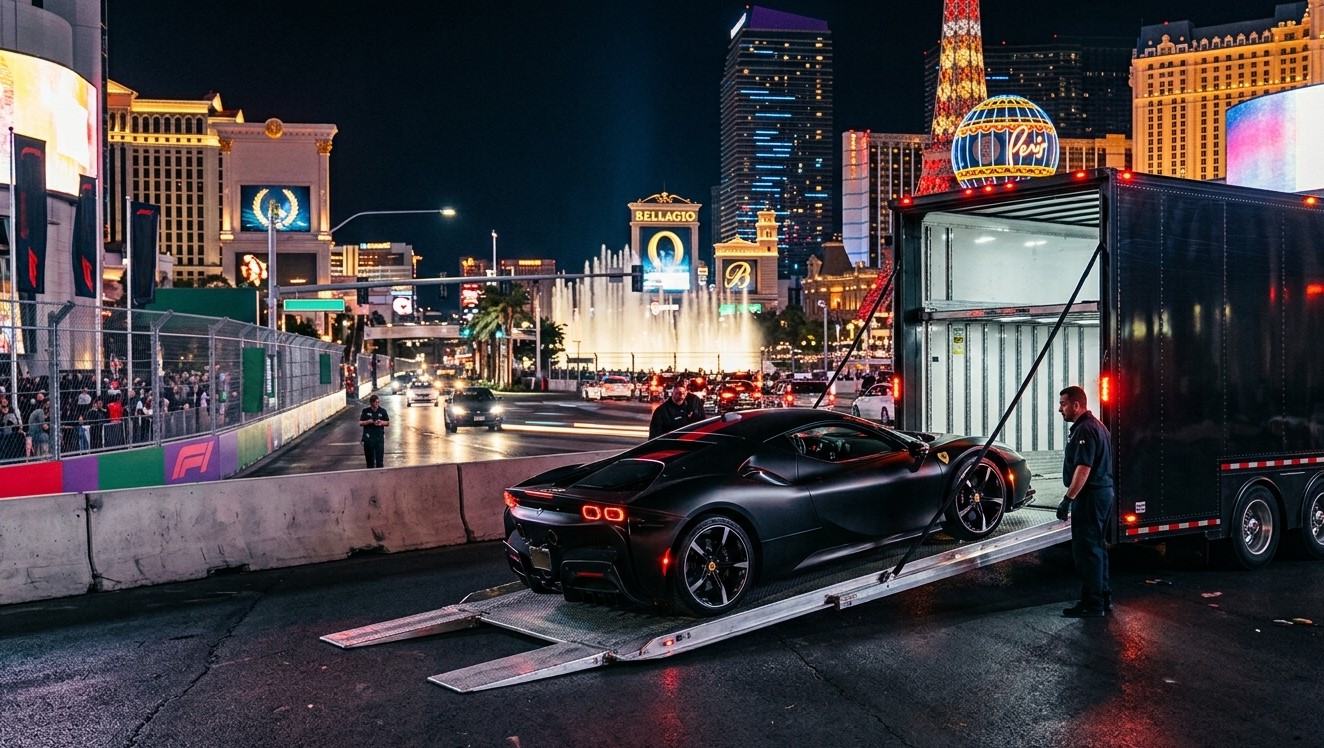
The F1 Las Vegas Grand Prix runs the third weekend of November every year now. The fastest cars in the world race through the Las Vegas Strip on a 3.8-mile street circuit.
The hardest logistics challenge isn’t the cars on the track. It’s the cars trying to get into the city for the weekend.
Hotel rates triple. Hangar space at Henderson Executive Airport books out 18 months ahead.
The auto transport market, which most people don’t think about until they need it, runs into a wall every November. If you’re planning to ship a car to Las Vegas for the GP, here’s what the logistics actually look like.
What Happens to Las Vegas Auto Transport During F1 Week?
The week of the Las Vegas GP, the city absorbs about 350,000 visitors above its normal tourist load. A meaningful share of those visitors bring cars they want there.
F1 paddock guests with collector cars. Hospitality vendors shipping promotional vehicles. Celebrity guests with luxury vehicles.
Corporate clients staging fleets for client events. Plus the regular Las Vegas car-show traffic that piggybacks on race weekend.
The transport pipeline absorbs all of that in two corridors. The first is California to Las Vegas, which runs at roughly normal capacity year-round but spikes for race week.
The second is everywhere-else to Las Vegas, which depends on long-haul carriers willing to take a deadline-sensitive load.
Pricing in the two weeks before F1 weekend runs 40% to 70% above the rest of November on most lanes:
- Los Angeles to Las Vegas: normally $375 to $475; F1 week $550 to $750.
- San Francisco to Las Vegas: normally $675 to $850; F1 week $1,000 to $1,300.
- Miami to Las Vegas: normally $1,300 to $1,600; F1 week $1,800 to $2,400.
- New York to Las Vegas: normally $1,400 to $1,700; F1 week $2,100 to $2,800.
- Chicago to Las Vegas: normally $1,100 to $1,350; F1 week $1,500 to $2,000.
Those numbers assume open transport on a standard vehicle. Most F1-week vehicles into Las Vegas go enclosed, which adds another 35% to 50% on top.
The Two-Stage Booking Problem
The hard part of F1 week shipping isn’t the price. It’s the pickup window. The race weekend runs Thursday through Saturday night, with most events front-loaded Friday and Saturday.
Vehicles need to be at the destination by Wednesday at the latest, and many F1 guests want them in place by the previous Sunday or Monday.
Working backward from a Monday-before-race-week delivery, you need a 14-day pickup window for cross-country shipments. For California pickups, 10 days. Inside those windows during F1 week, you’re competing for slots against every other person trying to get a car into Las Vegas.
The pattern that works: book the moment your race weekend tickets are confirmed. For most attendees, that’s August or September.
If you wait until October, you’re paying the surge premium. If you wait until two weeks out, you’re paying expedited rates and hoping a carrier has a slot.
The Enclosed Trailer Bottleneck
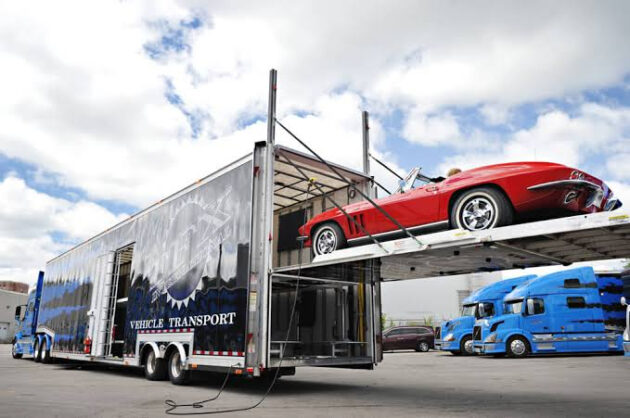
Most F1 fans shipping a vehicle want enclosed transport. The cars going to Vegas are show cars, sports cars, exotic supercars, and collector vehicles. None of them belong on an open carrier, especially through November weather across the Mountain West.
The problem: there are roughly 8,000 enclosed transport trailers operating in the United States at any time. Open transport trailers number around 65,000.
The enclosed fleet is small, the slots are tight, and during F1 week most of them are already booked for other events (Mecum Las Vegas runs the same month) plus the standard luxury vehicle flow.
If you’re shipping enclosed for F1 week, you need to be booked by mid-September. Mid-October is risky. By November 1, you’re calling brokers, hearing apologies, and looking at terminal-pickup options outside Las Vegas.
Why Do Door-to-Door Falls Apart in Vegas?
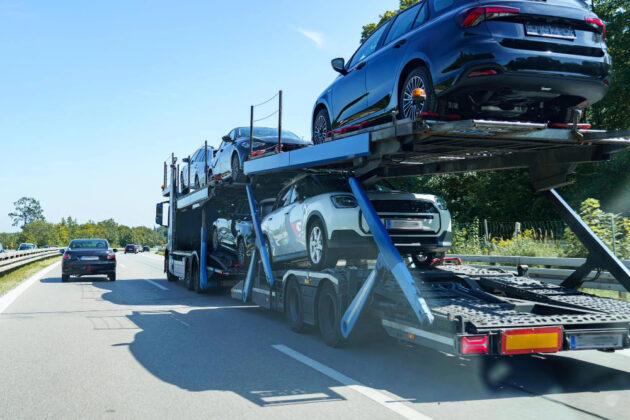
Vegas door-to-door delivery during race week is largely a fiction. The Strip is closed for the GP circuit setup starting the Monday before the race.
Hotel valet operations are at capacity. Loading zones at the major resorts are gridlocked. The fastest carriers in the world know how to manage the circuit. Most auto transport drivers don’t.
The practical move is to route the car to a Las Vegas terminal pickup point. Carriers prefer the Henderson area, the North Las Vegas industrial district, or one of the offsite storage facilities near the airport. From there, you take an Uber or have your hotel arrange transport.
Booking with a broker that runs the Las Vegas lane regularly is the difference between a delivered car and a stranded carrier on the wrong side of a closed Boulevard.
Auto transport Las Vegas is the most local-knowledge-sensitive lane in the country during F1 week, and it’s worth picking a provider that has run it before.
Verify any carrier’s authority on FMCSA SAFER before you wire deposits. The race week brings out a small number of opportunistic operators who quote low, take deposits, and then can’t deliver. SAFER tells you in 30 seconds whether the broker or carrier is who they say they are.
The SEMA Week Overlap You Probably Forgot About
SEMA, the Specialty Equipment Market Association show, runs at the Las Vegas Convention Center the first week of November every year.
That’s two weeks before the F1 GP. SEMA brings about 165,000 attendees and a massive vehicle staging operation across the Vegas Valley.
Most of those vehicles need to leave Las Vegas in the week between SEMA and F1, which means the outbound capacity is already strained when F1 inbound demand kicks in.
The downstream effect: carriers running west-to-east out of California in the first half of November are pre-booked with SEMA returns.
By the time F1 attendees start calling for late-November pickup, the eastbound capacity coming through Vegas is gone.
If you’re shipping in from the East Coast and you waited until late October, the SEMA squeeze is the reason you can’t find a carrier.
What to Bring With the Car
Six things people forget:
- A spare set of keys held by somebody not traveling with you
- Insurance documentation showing the car is covered in Nevada
- A walk-around video of the car at pickup, including the underside
- Tire pressure adjusted for the Vegas elevation (about 2,000 feet, drops effective pressure slightly)
- A fuel level above quarter tank (most carriers require this; quarter tank is the sweet spot)
- Pickup contact info for somebody in Vegas who can take delivery if you’re flying separately
The fuel level requirement catches a lot of first-timers. Carriers are paying for cargo weight, and excess fuel adds weight without value. They want enough to start and drive on and off the trailer. Not a full tank.
After the Race: The Return Leg
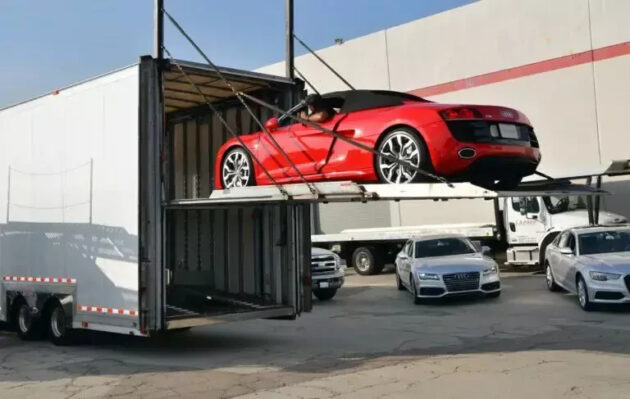
The carrier capacity reverses for the return leg. By Sunday night, every F1 attendee with a vehicle wants it picked up Monday. The Tuesday-to-Friday window after the race is the tightest carrier supply of the year on outbound-Las Vegas lanes.
Book the return at the same time you book the inbound. Most carriers will hold a forward-dated booking without a payment. The carrier won’t volunteer the return-leg option. Ask for it.
One last note on the return leg. If you’re shipping a high-value or exotic vehicle home after the race, ask the carrier whether the return trailer is going to overnight in Vegas before pickup or if it’s running through.
A trailer parked in a Vegas industrial yard over race weekend is sitting near a lot of vehicles in the same situation, and the smarter carriers route through without an overnight. Pay $50 to $100 more for the through-route if it’s offered.
The F1 Las Vegas Grand Prix is the most logistically complicated weekend on the American calendar for shipping a vehicle. The race lasts two hours. The transport headache lasts four months. Plan accordingly.